 Superior Saddlery — Andreas Maschke
|
Superior Saddlery — Andreas Maschke
|
 Certified Used Saddles — David Solum
The leading online resource for NCHA cutting saddles — sponsored by Superior Saddlery and Certified Used Saddles. View their inventory here online.
What Defines a Cutting Saddle
The moment an NCHA competitor drops the reins, the saddle takes over. It must hold the rider secure and still through violent lateral moves, hard stops, and explosive turns — all without the rider appearing to assist.
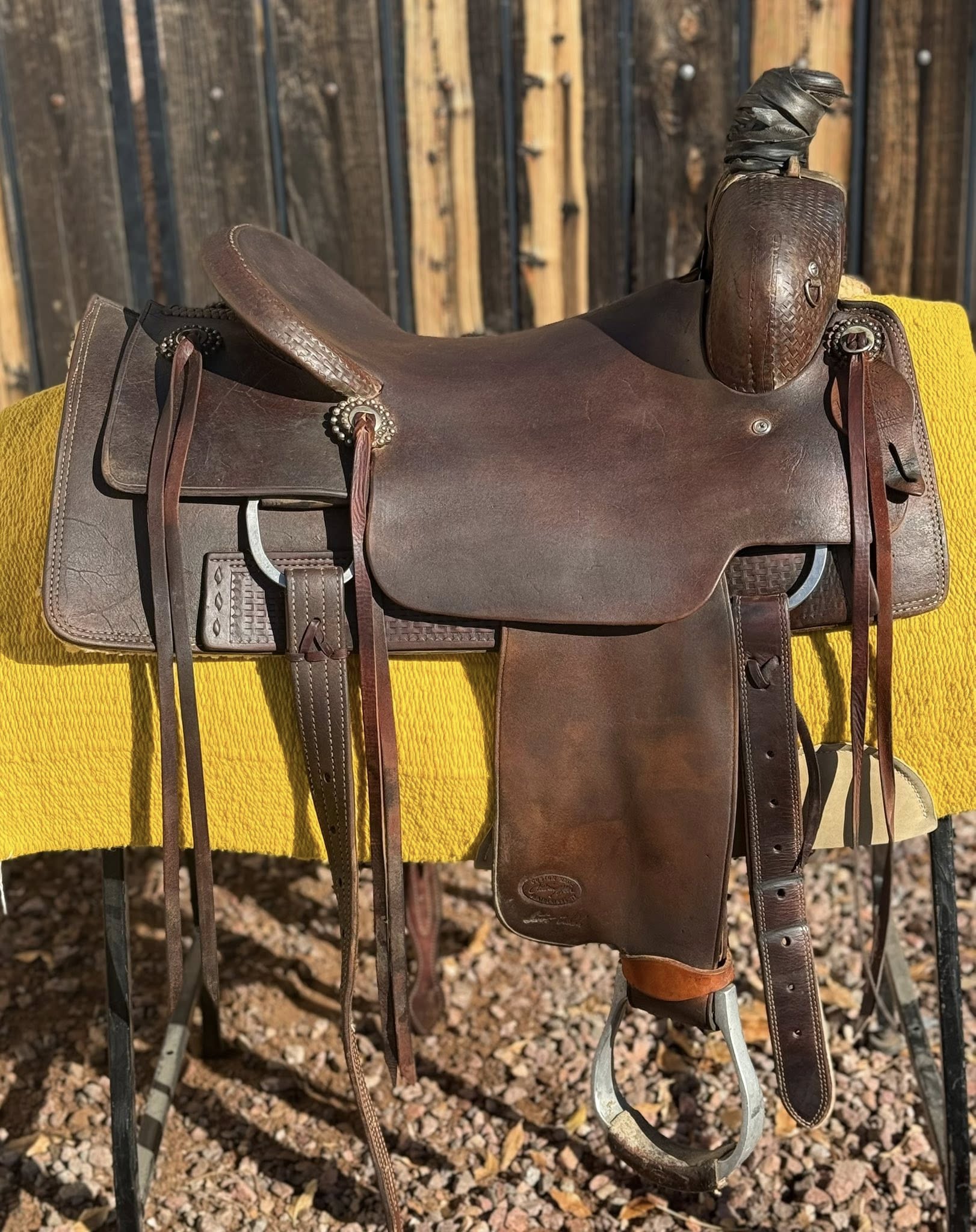
The defining geometry of the cutting saddle. The deep pocket and tall cantle wrap the rider in place so the seat, hip, and hand stay quiet while the horse makes violent lateral moves underneath. The opposite priority from a reining saddle.
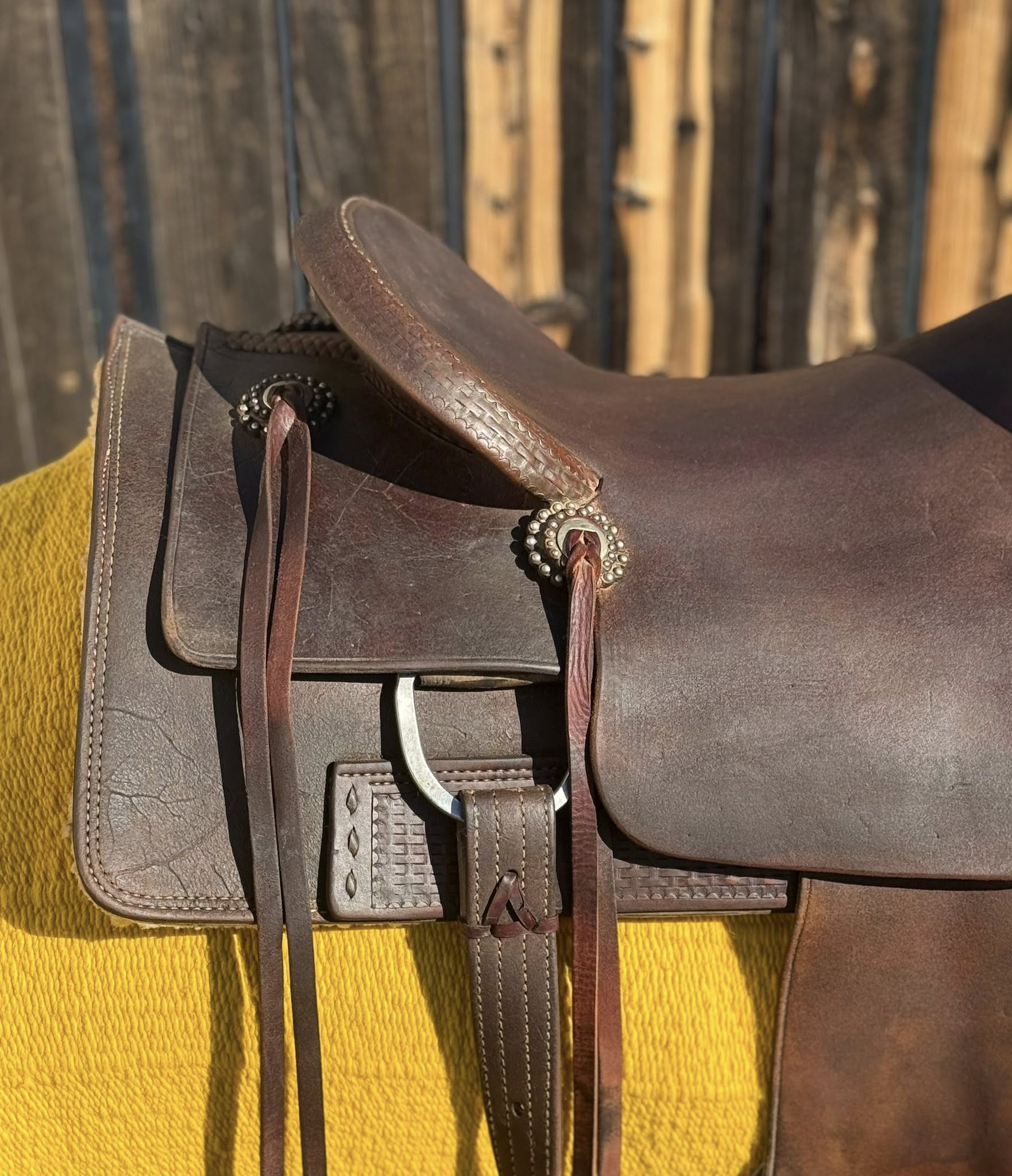
Cutting saddles run a dropped or 7/8 rigging position — setting the front cinch back from the shoulder so nothing binds or interferes with the horse's front-end action during the hard stop and turn into the cow.
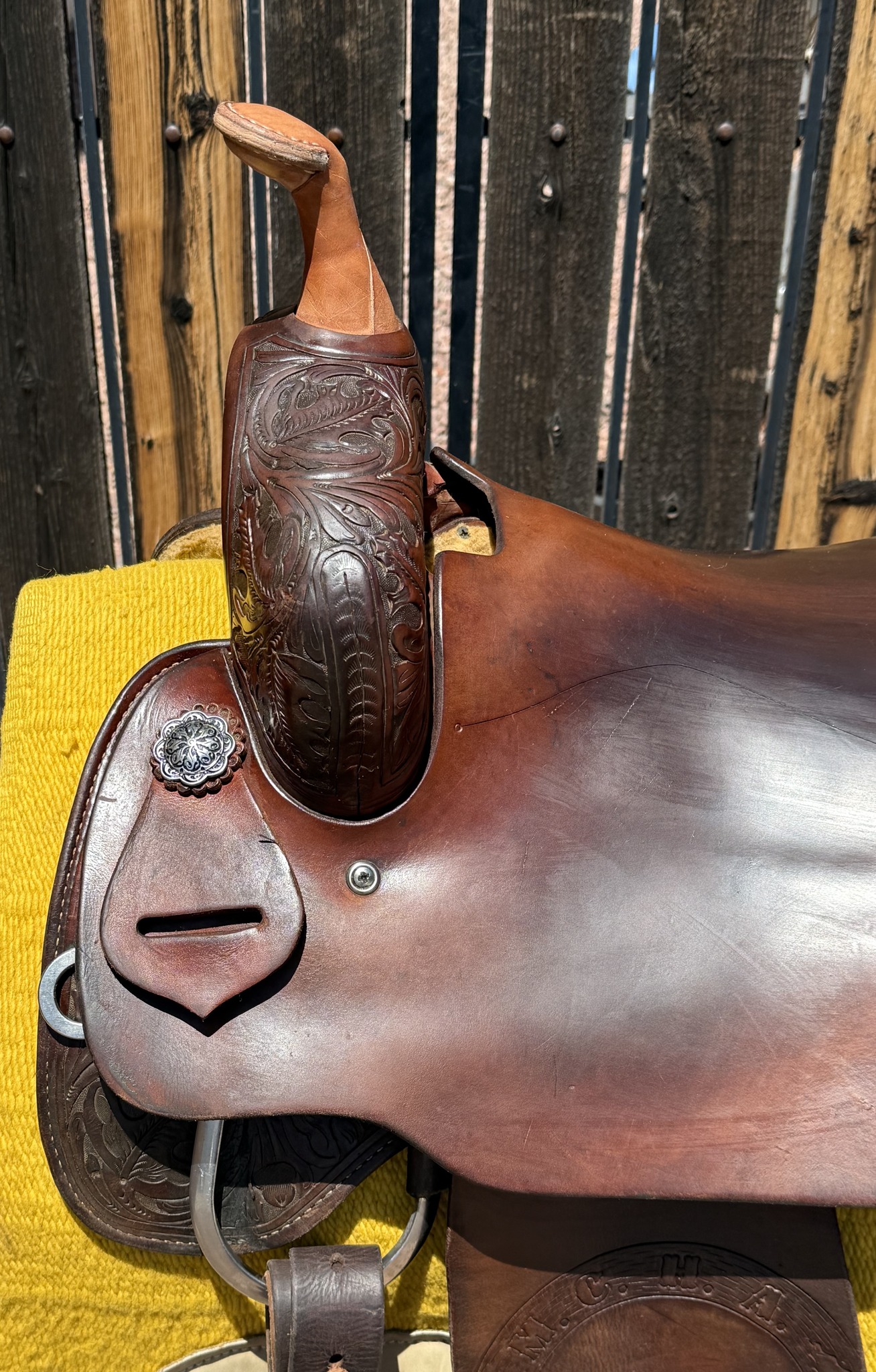
Unlike the thin reining horn, a cutting horn is taller and built to grab. When a horse drops hard and low after a cow, the rider needs a solid brace point — the horn is exactly that, every single time.
At a Glance
| Feature | Cutting | Reining | Cow Horse |
|---|---|---|---|
| Seat Depth | Deep pocket — holds rider in | Flat — rider stays neutral | Medium — flexible |
| Cantle Height | High — primary brace | Low — unrestricted movement | Moderate |
| Horn | Tall, strong — grab point | Short, thin — minimal | Moderate |
| Rigging | Dropped / 7/8 | 7/8 in-skirt | 7/8 to full |
| Cattle Work | One cow, free rein | None | Fence, boxing, patterns |
| Governing Body | NCHA | NRHA | NRCHA |
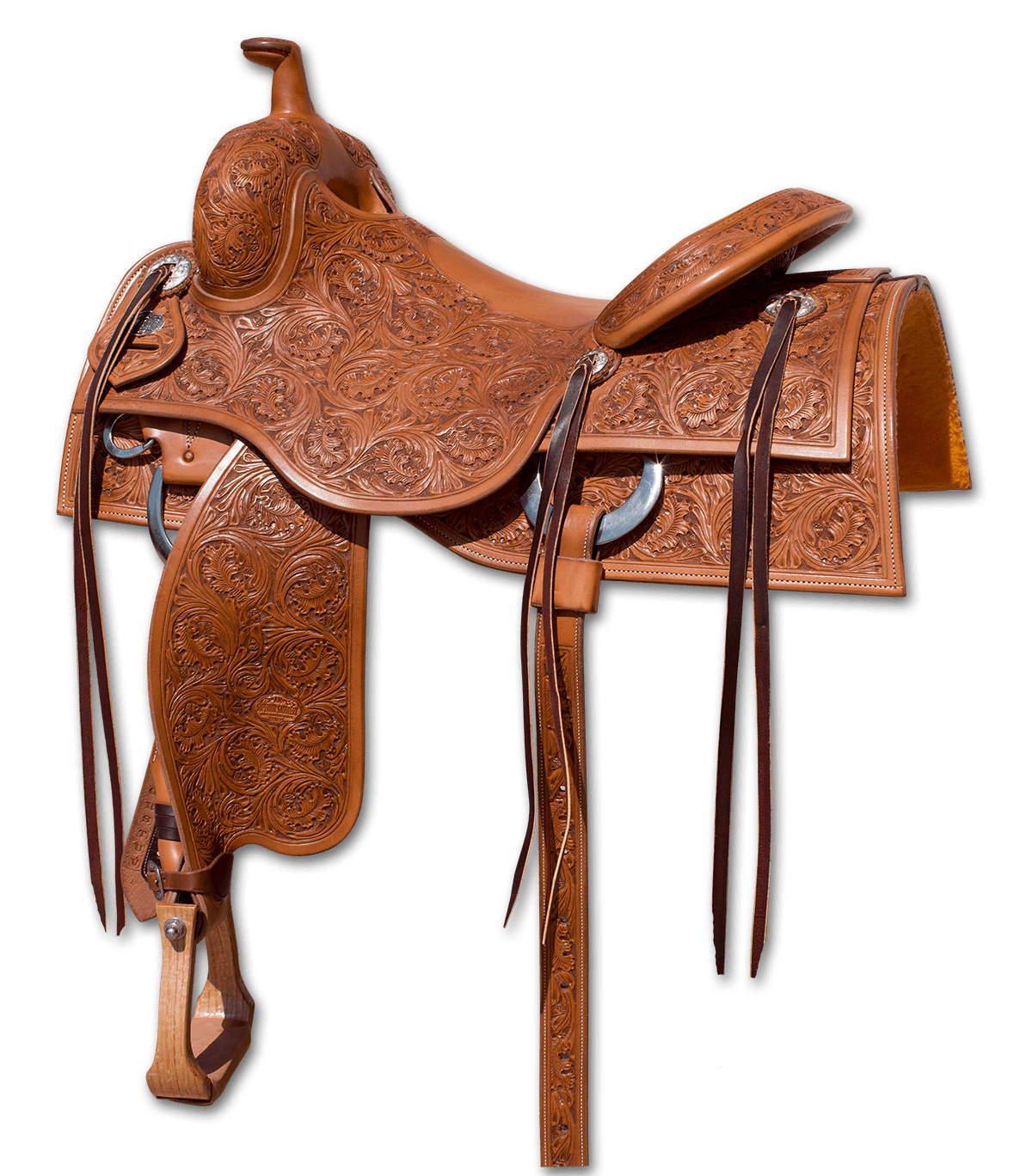
Andreas Maschke builds the SS Ranch Cutter for NCHA competition and serious ranch cutting. Full tooled, SYMMETREES™ encapsulated wood tree, hand-crafted in the USA.
Certified Used Inventory
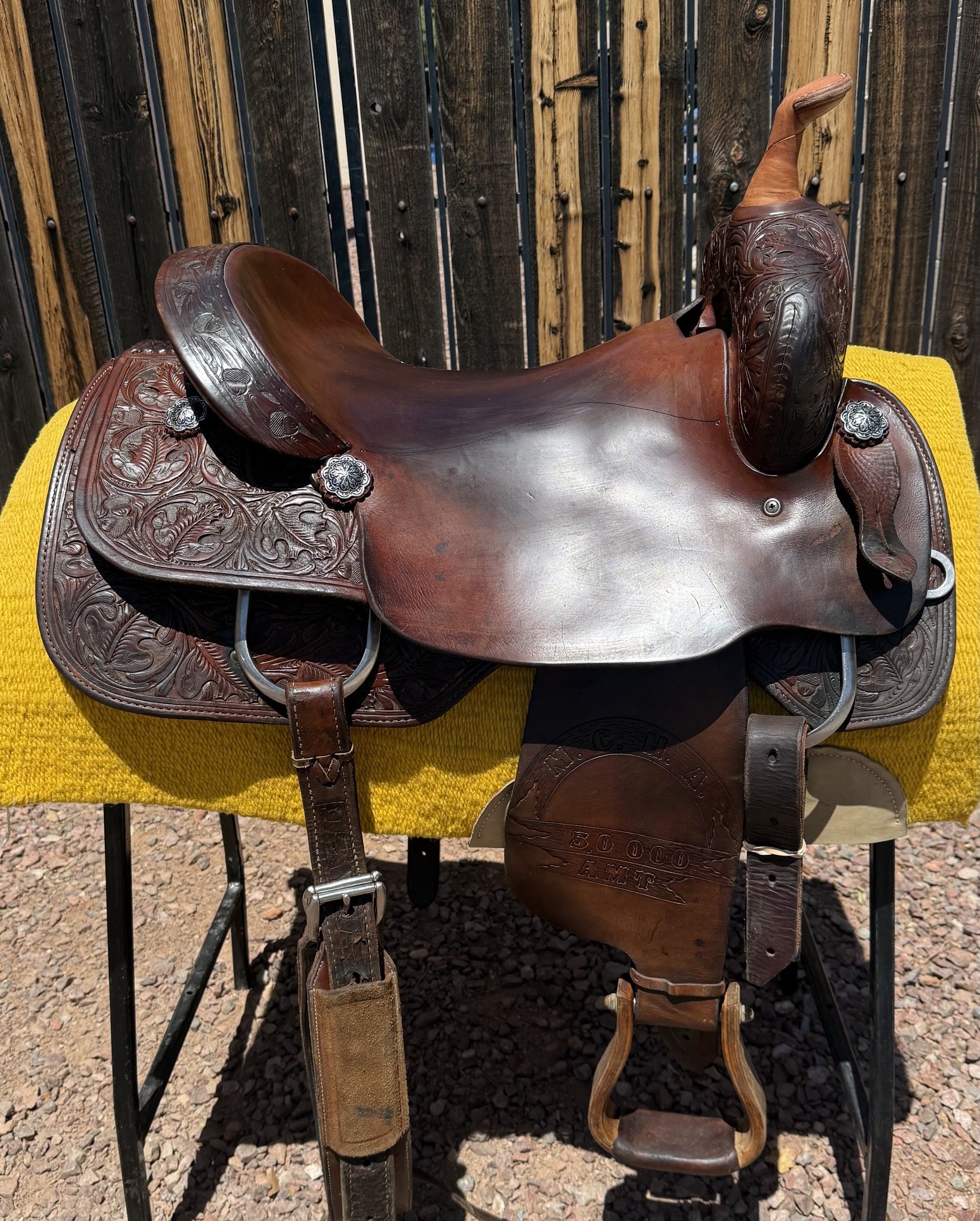
Competition credentials are baked into the name — the Teddy Johnson Cutter is built to the specifications of one of the NCHA's most respected competitors. A 16" seat, close-contact fender geometry, and free-swinging rigging give the horse the lateral freedom cutting demands while keeping the rider centered and quiet through the stop.
View Full Listing →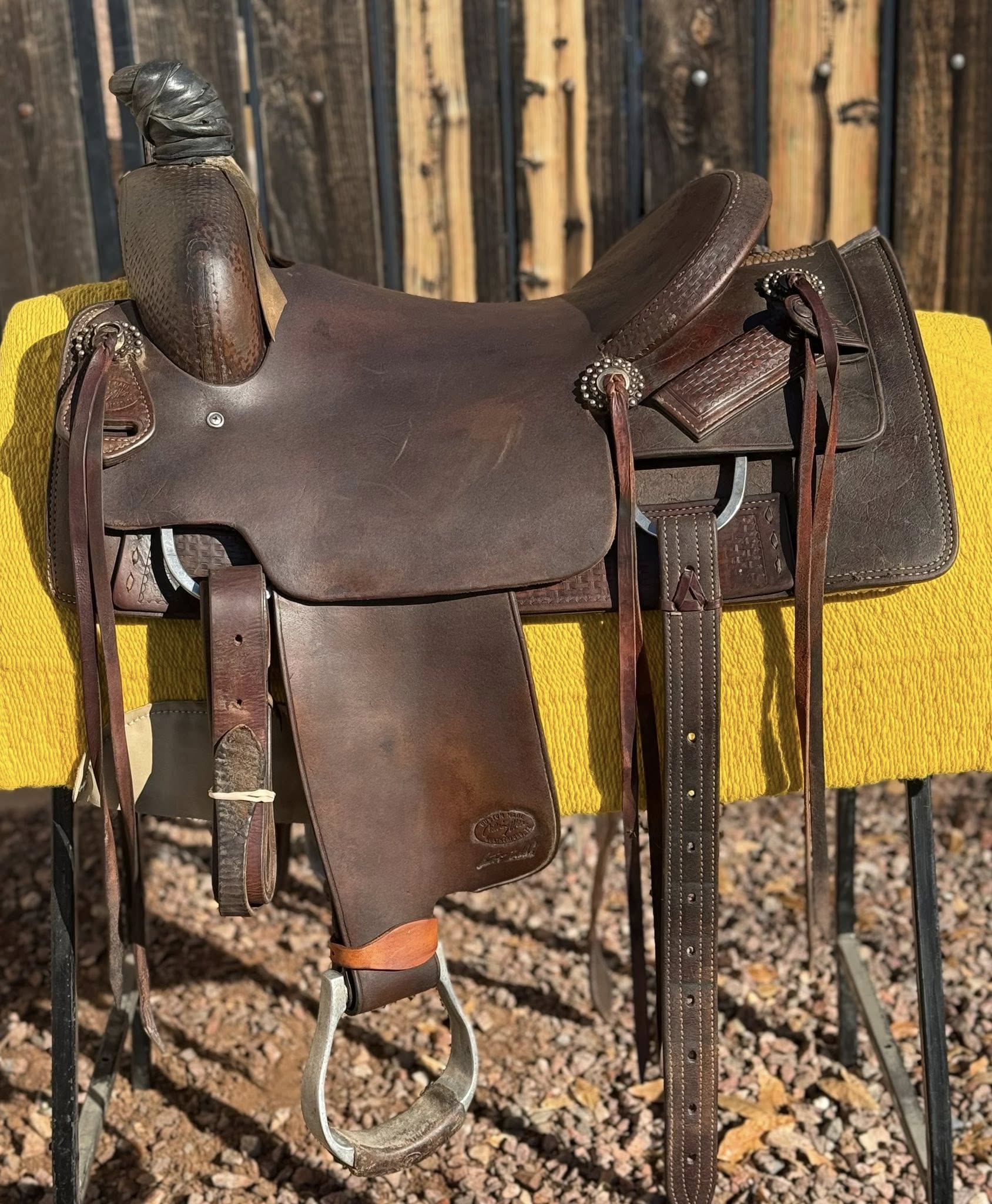
Calvin Allen's Ranch Cutter bridges the working ranch and the cutting pen without compromising either. At 15½", it fits the smaller-framed rider who needs a saddle that handles both cattle work and competitive cutting without swapping equipment. Free-swinging rigging and a flat seat keep horse movement unrestricted through the cow.
View Full Listing →David Solum has spent decades around NCHA competitors. He knows what separates a saddle that holds a rider through a hard stop from one that doesn't.